

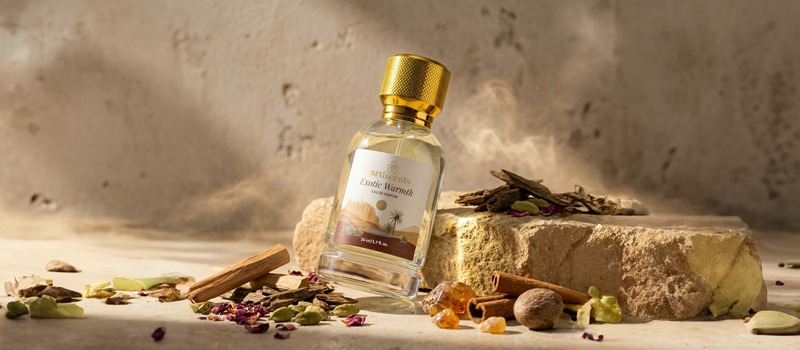
The realm of perfumery conceals mysteries from the beginning of time that makes perfumes as special as they are today. They are elixirs that carry narratives spanning four millennia transforming from scientific breakthroughs and cultural rituals to the relationship that we have with scent today.
Each bottle of perfume contains far more than merely pleasant aromas but also history that preserves centuries of accumulated wisdom and hence enhances its enduring role in human expression. Artiscents captures this essence by blending timeless traditions with modern craftsmanship in every creation.
1. Ancient Mesopotamia, The Birthplace of Perfumery
The art of perfume creation originated over 4,000 years ago. The term 'perfume' stems from the Latin phrase 'per fumum.' This translates precisely to 'through smoke,' referencing ancient aromatic rituals. Early civilizations burned precious resins like frankincense as divine offerings and believed that fragrant smoke carried their prayers directly to the heavens.
Archaeologists unearthed the world's oldest perfume factory in Cyprus in 2004, and this is a noteworthy discovery that dates to approximately 2000 BCE.
Intact mixing bowls and distillation apparatus were found in the site of discovery which gave information about the history. Ancient perfumers crafted their fragrances using indigenous Mediterranean herbs like lavender blended with olive oil created the base formulations that laid the foundation for modern perfumery techniques.
The famous Cleopatra VII mastered perfume as a strategic weapon of influence. She infused her ship's sails with concentrated rose essence, announcing her arrival long before her vessel appeared.
This calculated deployment of fragrance demonstrated scent's power to create unforgettable impressions. Ancient Egyptian royalty also scented their palaces with kyphi incense nightly, a sacred blend contained sixteen separate ingredients.
2. The Unusual Science of Scent Detection
The human olfactory system can distinguish over one trillion scents. This capacity far exceeds our ability to differentiate colours. This is because our nose connects directly to the limbic system and this neural pathway explains why certain fragrances instantly transport us to distant memories. Individual body chemistry dramatically alters how fragrances develop on skin. Skin pH levels fluctuate based on diet and hormones. Natural skin oils interact with perfume molecules in one-of-a-kind ways, explaining why identical fragrances smell noticeably varied on diverse individuals. The same perfume transforms into a personalised signature on each wearer.
Skin temperature plays a crucial role in fragrance projection as pulse points generate warmth that accelerates the evaporation of scent molecules and wrists, and neck serve as well-suited application zones. These warmer areas allow perfumes to unfold through their layered structure and how you wear your perfume changes how it acts with your skin and stays on your skin.
3. The Architectural Beauty of Fragrance Composition
Master perfumers construct fragrances using a precise three-tier architecture. Top notes create the immediate impression upon application, with these volatile molecules evaporating within fifteen to thirty minutes of contact.
Heart notes emerge as top notes dissipate. This middle phase develops over two to four hours on skin. Floral and spicy accords often dominate the heart composition. These notes form the perfume's personality. They establish emotional resonance that defines the wearing experience.
Base notes provide the foundation that anchors the entire fragrance structure. These dense molecules linger for six to eight hours or longer. Woods and ambers create depth. Artiscents meticulously balances these three layers in their collections, ensuring each transition flows seamlessly to create an evolving olfactory narrative throughout the day. The brand's attention to structural harmony ensures a sophisticated wearing experience. Explore their range to understand how proper layering transforms a simple scent into an all-day journey.
4. Astonishing Truths About Perfume Raw Materials
Natural perfume production demands staggering quantities of botanical materials. Creating one single pound of pure rose essential oil requires approximately 10,000 pounds of hand-picked petals.
The labour-intensive extraction process explains the premium pricing of natural perfumes. Synthetic alternatives offer accessibility while natural ingredients provide unmatched complexity.
The world's most prized perfume ingredients originate from unexpected sources. Ambergris, a scarce substance formed in sperm whale intestines, commands $10,000 per pound. This waxy material develops over years floating in ocean waters. Oud oil, extracted from diseased agarwood trees, reaches comparable prices. Only two percent of agarwood trees produce the resinous infection that yields oud.
Contemporary perfumery embraces synthetic molecules created through laboratory techniques. These innovations enable perfumers to replicate scents nature cannot consistently provide. Synthetic musks replaced animal-derived ingredients. Calone, a synthetic molecule discovered in 1966, created the entire aquatic fragrance category. These scientific advances democratised perfumery while expanding creative possibilities.
5. Perfume Traditions Across Civilizations and Centuries
Napoleon Bonaparte maintained an obsessive relationship with fragrance throughout his reign. Historical records document his consumption of sixty bottles of jasmine extract monthly.
He requested servants pour eau de cologne directly over his head daily. His portable travel case contained dozens of cologne bottles for military campaigns.
Distinct cultures developed unique perfume philosophies reflecting their values. Middle Eastern perfumery emphasises concentrated attar oils applied directly to skin. These alcohol-free formulations project intensely in hot desert environments. French perfumery pioneered alcohol-based compositions that create lighter experiences. Indian perfumery traditionally employs botanical ingredients suspended in sandalwood oil bases. These approaches demonstrate how geography shapes olfactory preferences.
The Grasse region in southern France earned its title as perfume capital during the 16th century. This area's Mediterranean climate proved ideal for cultivating jasmine and rose. By the 18th century, Grasse supplied raw materials to perfume houses throughout Europe. Today, this historic region continues producing exceptional essential oils for luxury fragrances.
6. Fragrance as the Ultimate Form of Self-Expression
Scientific research confirms that seventy-five percent of daily emotions stem from smell and this profound neurological connection makes fragrance selection an intimate act of self-definition. The chosen perfume becomes an invisible signature that precedes you and becomes a communication aspect of personality.
Fragrance preferences often reflect deeper psychological traits. Studies indicate that extroverts gravitate toward bright, citrus-forward compositions while introverts frequently prefer woody fragrances that create intimate scent bubbles. Nostalgic individuals select perfumes reminiscent of childhood memories. This psychological dimension makes perfume selection a journey of self-discovery. Artiscents collection to find the scent that truly represents who you are, no matter you go for men’s perfume, women’s perfume or unisex perfume choices.
The Final Enduring Power and Meaning of Fragrance
Perfume stands as a refined blend of history, chemistry, culture, and identity. Each bottle reflects centuries of knowledge shaped by evolving human traditions. Ancient rituals and modern science both influences how fragrances are created today.
Every composition carries carefully selected notes that reveal depth over time. Top, heart, and base layers work together to shape the full experience. This structured design allows a fragrance to evolve in a balanced manner. Fragrance functions as a subtle extension of identity. Whether one gravitates toward unisex perfumes, men’s perfumes, or women’s perfumes,
Artiscents understands this deep emotional dimension of fragrance selection. We curate fragrances that resonate with assorted sensibilities. The range of perfumes spans from bold statement scents to subtle everyday elegances. Each composition allows wearers to find authentic olfactory representations of their identity
Whether drawn to tradition, science, or personal expression, engaging with perfume at this level transforms it from a routine accessory into a deliberate and meaningful choice.


