

What’s in the Guide
- Tunisian neroli is prized for its bright, refined floral character and natural sense of freshness.
- Its scent brings together delicate citrus, soft florals, and subtle green nuances in a beautifully balanced way.
- The note captures a distinctly Mediterranean mood, blending sunlit freshness with understated elegance.
- Neroli can lift a fragrance while creating a smooth connection between its brighter and deeper notes.
- Its versatility allows it to pair effortlessly with citrus, florals, musk, and woody accords.
Freshness can be fleeting in perfumery, but Tunisian neroli gives it a more distinctive character. Distilled from bitter orange blossoms, this Mediterranean ingredient brings together delicate citrus, airy florals and a subtle green freshness, creating a scent that feels luminous yet refined. It is this balance that makes neroli so captivating: bright enough to lift a composition, yet soft enough to blend beautifully into its deeper layers. But there is more to this note than its fresh floral profile. Its origin, character and role in a fragrance all contribute to the effortless elegance it brings to the perfume world.
What Is Neroli?
Neroli is a fragrant essential oil made from the blossoms of the bitter orange tree (Citrus aurantium). The delicate white flowers are typically steam-distilled to create an aromatic oil with a fresh, luminous floral character. In perfumery, neroli is valued for its ability to bring brightness and refinement without making a fragrance feel overly sweet or heavy.
Tunisia is one of the Mediterranean regions known for producing high-quality neroli. Its reputation comes from the careful cultivation and harvesting of bitter orange blossoms, which helps preserve the flower’s naturally fresh and expressive character.
On the skin, neroli is often described as fresh, floral, citrusy and subtly green, with a soft sweetness underneath. It sits comfortably between citrus and floral notes, giving perfumes an airy quality that feels polished rather than overpowering.
What Does Tunisian Neroli Smell Like?
Fresh, lightly citrusy, and softly floral, with a subtle green undertone running quietly beneath the surface. That description captures Tunisian neroli fairly well, though it undersells how balanced the note feels on skin. Neroli manages a rare trick, staying luminous without turning sharp, and elegant without becoming heavy. That clarity explains why the note appears so often in fresh floral perfume compositions aimed at both casual and formal wear. Neroli rarely acts as the loudest note in a fragrance. Instead, it works quietly, smoothing the transition between a bright citrus opening and a deeper floral or woody heart. That restraint is exactly what gives Tunisian neroli its long-lasting, refined character.
Why Tunisian Neroli Feels Like Mediterranean Elegance
Certain notes carry geography inside them, and neroli belongs firmly to that category. Grown across sun-drenched groves in Tunisia, the bitter orange blossom captures something specific about Mediterranean air: warm, breezy, and never overly sweet. That association makes neroli a natural anchor for any Mediterranean fragrance, evoking coastal towns and citrus orchards without a single literal reference. Luxury scents often lean on this kind of storytelling, letting a single note suggest an entire setting. Neroli achieves that with unusual efficiency, needing little else to feel complete. It reads as effortless rather than try-hard elegance, the kind found in relaxed European summers rather than heavy formal events.
Tunisian Neroli in Effortless Charm
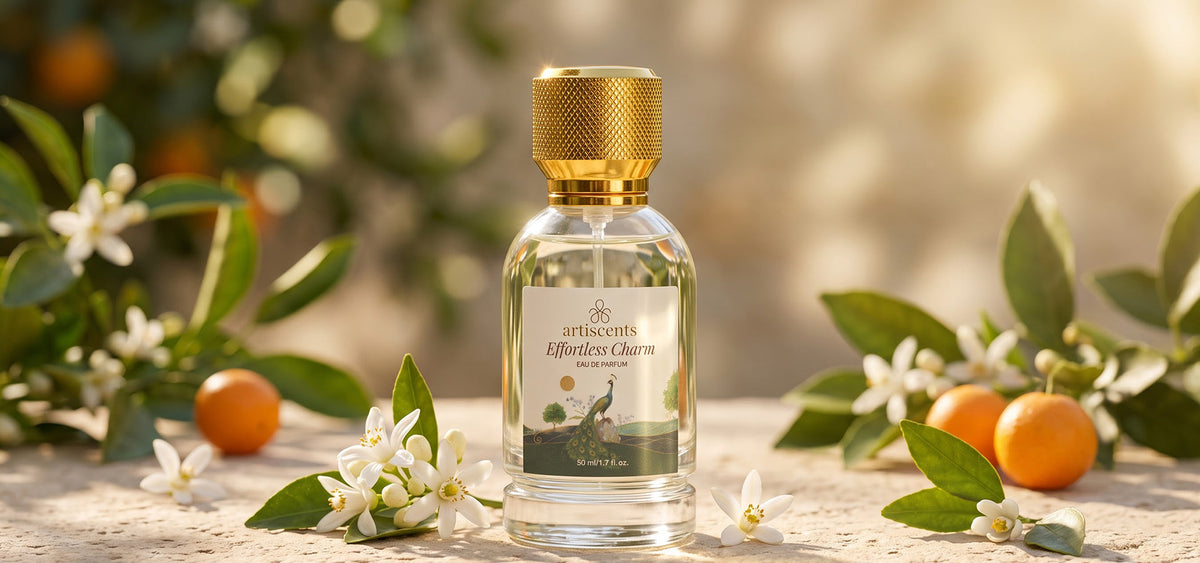
Among Artiscents' fragrances, Tunisian neroli plays its most defining role inside Effortless Charm . The note enters as a luminous middle heart, adding soft floral brightness without overwhelming the rest of the composition. It keeps the fragrance feeling clean and modern, balancing that freshness against a subtle warmth building underneath.
As Effortless Charm settles, its citrus-floral character lingers gently rather than fading abruptly. This makes the fragrance suit both casual fragrance occasions and slightly more confident, put-together settings equally well. Neroli's gender-neutral nature also means Effortless Charm works comfortably as a unisex perfume, appealing to fragrances for women and men fragrance seekers alike without needing separate formulations.
How Neroli Pairs With Other Notes
Tunisian neroli rarely performs alone, since its real strength lies in how well it plays with others. It pairs beautifully with citrus, sharpening bright openings without adding harshness. Soft florals benefit from its presence too, gaining clarity rather than losing definition. Neroli also blends seamlessly into musky or woody bases, helping fragrances move naturally from a bright introduction into a warmer dry-down. That versatility explains why so many fresh luxury perfumes rely on neroli as a connective note, one capable of tying together very different fragrance families into something cohesive.
Final Thoughts
Tunisian neroli proves that freshness and sophistication are not opposites. The note brings clarity to a composition without demanding attention, letting deeper notes unfold at their own pace. Inside Effortless Charm, that quiet confidence becomes the entire personality of the fragrance. For anyone drawn to fresh floral perfume built on real craftsmanship, Tunisian neroli offers a genuinely elegant place to start.
FAQs
1. What does neroli blossom smell like?
Neroli blossom smells fresh and lightly citrusy, carrying a soft floral character alongside subtle green undertones. The scent feels bright and clean rather than sweet or heavy, which is why perfumers value it for balance.
2. Is Tunisian neroli a natural ingredient?
Yes, Tunisian neroli is fully natural, distilled directly from the blossoms of the bitter orange tree. Perfumery may refine or stabilise the oil slightly, but the source itself remains entirely botanical.
3. Does neroli make a perfume smell very floral?
Not particularly. Neroli adds brightness and elegance rather than heavy floral sweetness, making it feel closer to fresh than overtly floral. This restraint is part of why it suits so many different fragrance styles.
4. Is Tunisian neroli suited to men or women?
Neither exclusively. Tunisian neroli is a gender-neutral note that performs beautifully across fresh, floral, woody, and modern fragrance compositions, making it a natural fit for unisex perfume lovers.
5. What country is neroli from?
Neroli traces back to the Mediterranean and North African region, with the bitter orange tree believed to have originated further east before spreading through Arab trade routes into areas like Tunisia, Morocco, Italy, and Spain. Tunisia in particular is prized among perfumers for its neroli, since small-scale, low-intervention cultivation there tends to preserve the blossom's natural clarity.


